
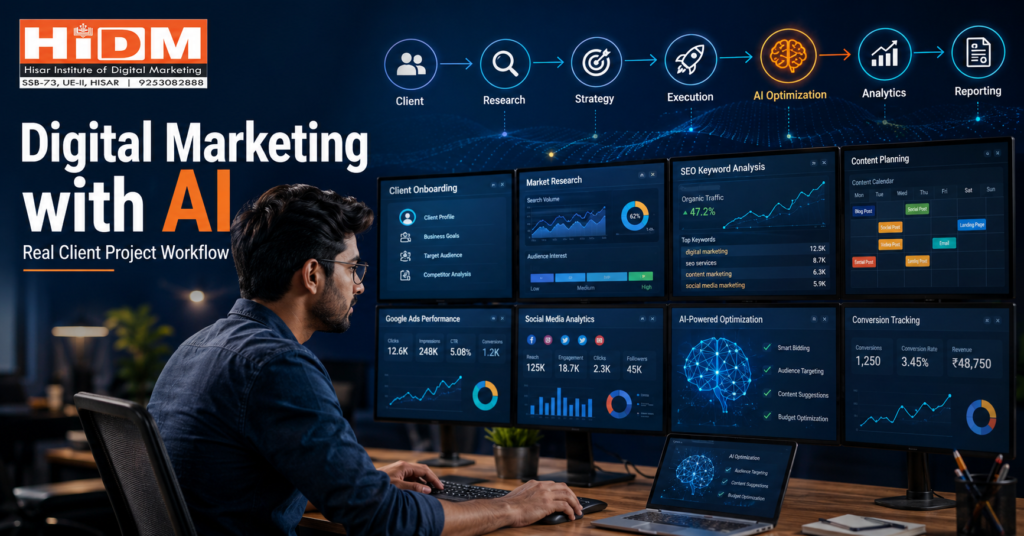
Learning digital marketing is not just about understanding SEO, Google Ads, social media, content marketing, or analytics. The real learning begins when you apply these skills to an actual business problem.
This is where a Real Client Project Workflow becomes important.
A real client project teaches digital marketers how to understand business goals, research the target audience, create a marketing strategy, use AI tools, execute campaigns, analyze data, and continuously improve performance. Unlike theoretical assignments, real projects involve practical challenges, deadlines, changing requirements, budgets, and measurable results.
With the growing role of Digital Marketing with AI, modern marketers can now use artificial intelligence to make research, content creation, analysis, optimization, and reporting faster and more efficient.
Let’s understand how a professional Real Client Project Workflow works from start to finish.
What Is a Real Client Project Workflow?
A Real Client Project Workflow is a step-by-step process followed by digital marketers to take a marketing project from the initial client discussion to final reporting and optimization.
A typical workflow includes:
- Client onboarding
- Business and competitor research
- Goal setting
- Target audience research
- Digital marketing strategy
- Content and campaign planning
- Execution
- AI-assisted optimization
- Performance tracking
- Reporting and improvement
The objective is not simply to complete tasks. The objective is to generate meaningful business outcomes such as leads, sales, website traffic, brand awareness, engagement, or customer acquisition.
Step 1: Understanding the Client and Business
Every successful digital marketing project starts with understanding the business.
Before creating a campaign, marketers need to know:
- What products or services does the business offer?
- Who are its customers?
- What makes the brand different?
- What are its business objectives?
- Which platforms does it currently use?
- Who are its major competitors?
- What problems is the business trying to solve?
For example, a local jewellery brand may want more showroom visits, while an educational institute may want student enquiries and admissions.
The marketing strategy cannot be the same for both businesses.
AI tools can assist marketers during this stage by helping organize information, identify patterns, summarize research, and generate initial research questions. However, human understanding remains essential for making strategic decisions.
Step 2: Market and Competitor Research

The next stage of the Real Client Project Workflow is research.
Digital marketers study competitors, search trends, customer behavior, social media activity, website performance, content strategies, and advertising approaches.
For SEO projects, keyword research is particularly important. Marketers identify relevant search terms based on:
- Search intent
- Competition
- Relevance
- Business value
- Potential traffic
AI can make this research process more efficient by helping marketers categorize keywords, identify content ideas, analyze large amounts of information, and discover potential gaps.
But AI-generated suggestions should always be reviewed by a marketer before being implemented.
Step 3: Setting Clear Marketing Goals
Once research is complete, the next step is defining measurable goals.
A client may want:
- More website traffic
- More leads
- Higher sales
- Better search rankings
- Increased social media engagement
- More brand awareness
- Lower advertising costs
Instead of setting a vague goal like “increase marketing,” a professional team should establish measurable objectives.
For example:
Goal: Generate qualified leads through Google Ads and landing pages within a defined campaign period.
This makes it easier to measure whether the project is successful.
Step 4: Creating the Digital Marketing Strategy
After understanding the business and goals, marketers create a customized strategy.
A strategy may combine multiple channels such as:
- SEO
- Google Ads
- Meta Ads
- Social media marketing
- Content marketing
- Email marketing
- Blogging
- Website optimization
- Video marketing
This is where Digital Marketing with AI becomes particularly powerful.
AI can support marketers with content ideation, audience segmentation, ad-copy variations, SEO research, data analysis, creative concepts, and workflow automation.
However, AI should work as a productivity partner rather than completely replacing strategic thinking.
Step 5: Content and Campaign Planning
Once the strategy is finalized, the marketing team creates an execution plan.
For example, an SEO campaign may include:
- Keyword mapping
- Blog topics
- On-page optimization
- Internal linking
- Technical SEO improvements
- Content publishing
- Performance monitoring
Similarly, a social media campaign may include reels, static posts, carousels, stories, and promotional campaigns.
AI tools can help generate initial content ideas, hooks, headlines, captions, scripts, and variations. The final content should still be edited to match the brand’s voice, audience, and objectives.
Step 6: Executing the Project
This is where theory turns into practical experience.
The team begins implementing the strategy across selected platforms.
For example:
SEO: Optimize pages and publish targeted content.
Google Ads: Create campaigns, ad groups, keywords, advertisements, and landing pages.
Social Media: Publish content and manage audience engagement.
Content Marketing: Create blogs, videos, guides, and educational resources.
A proper Real Client Project Workflow also requires coordination between different activities. A change in the website, landing page, advertisement, or offer can influence campaign performance.
Step 7: Using AI for Optimization
Launching a campaign is not the end of the project.
Digital marketers need to continuously analyze performance and identify opportunities for improvement.
AI can help analyze large datasets and identify patterns faster. Marketers can use AI-assisted workflows for:
- Performance analysis
- Content optimization
- Ad-copy testing
- Keyword clustering
- Audience insights
- Reporting assistance
- Conversion analysis
- Identifying underperforming areas
For example, if an advertising campaign receives clicks but generates very few conversions, the marketer needs to investigate the complete funnel rather than simply increasing the advertising budget.
Step 8: Tracking KPIs and Performance
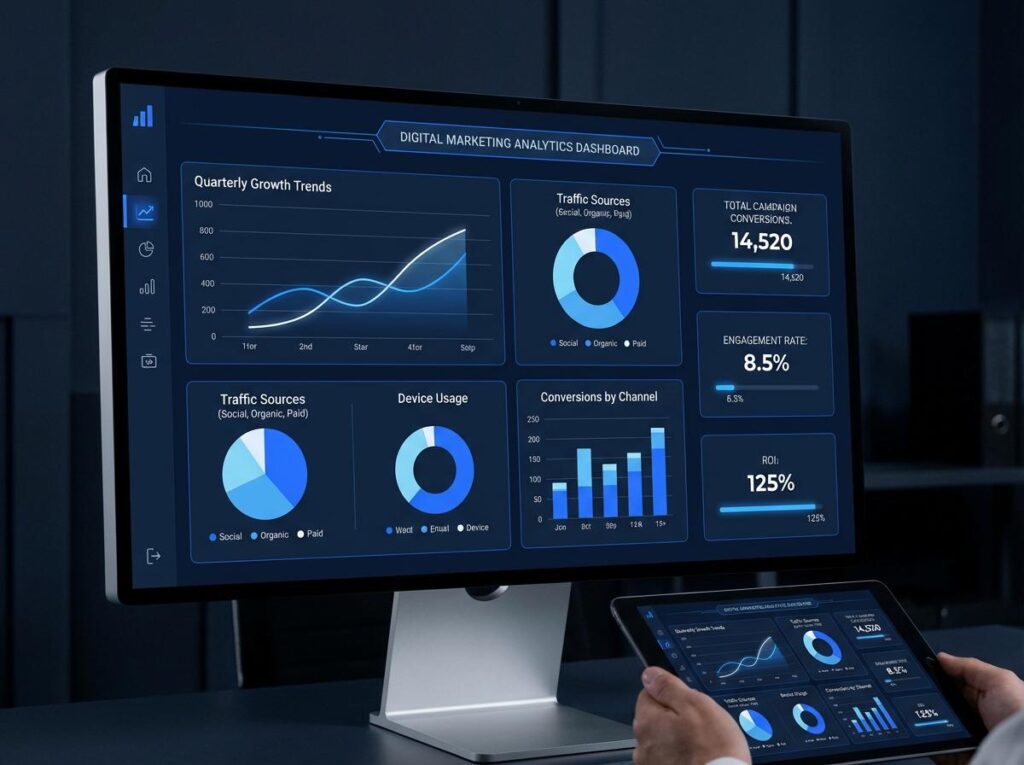
A professional digital marketing project must be measurable.
Depending on the campaign, important KPIs may include:
- Website traffic
- Leads
- Conversion rate
- Cost per lead
- Return on ad spend
- Search rankings
- Engagement rate
- Click-through rate
- Bounce rate
- Customer acquisition cost
Analytics platforms and reporting dashboards help marketers understand what is working and what needs improvement.
The focus should always remain on business results rather than vanity metrics alone.
Step 9: Client Reporting
Client reporting is another important part of the Real Client Project Workflow.
A professional report should clearly explain:
- What activities were completed
- What results were achieved
- Which KPIs improved
- What challenges occurred
- What was optimized
- What should happen next
Instead of presenting complicated data without context, marketers should explain what the numbers mean for the client’s business.
AI can help summarize large amounts of performance data and create initial report structures, but marketers should verify all information before sharing it with clients.
Step 10: Optimization and Continuous Improvement
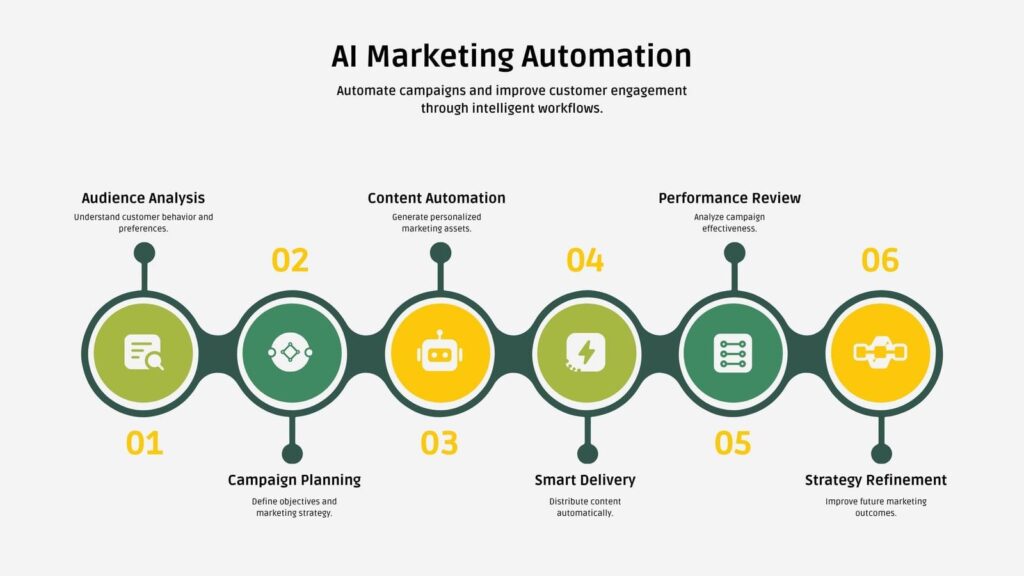
Digital marketing is an ongoing process.
After analyzing the results, marketers identify what should be changed in the next cycle.
This could include:
- Testing new ad creatives
- Improving landing pages
- Targeting different keywords
- Creating new content
- Changing audience segments
- Adjusting campaign budgets
- Improving conversion paths
This creates a continuous cycle:
Research → Strategy → Execution → Measurement → Optimization → Improvement
That cycle is the foundation of a successful digital marketing project.
Why Real Client Projects Matter for Digital Marketing Learners
Real projects provide something that theoretical learning cannot fully replicate: practical decision-making experience.
Learners discover how to:
- Communicate with clients
- Understand real business requirements
- Work with deadlines
- Solve unexpected problems
- Analyze real data
- Use AI tools responsibly
- Create measurable strategies
- Present results professionally
For students and aspiring digital marketers, this experience can also help build a stronger portfolio and demonstrate practical skills to potential employers or clients.
Institutes such as HiDM (Hisar Institute of Digital Marketing) can use practical project-based learning to bridge the gap between classroom concepts and real-world digital marketing requirements.
Digital Marketing with AI: The Future of Practical Learning
AI is changing the way digital marketers work, but the fundamentals remain important.
A successful marketer still needs to understand customers, positioning, communication, analytics, strategy, and business objectives.
The difference is that AI can help marketers perform many tasks more efficiently.
The future belongs to professionals who can combine:
Digital Marketing Skills + AI Tools + Data Analysis + Creativity + Strategic Thinking
Learning individual tools is not enough. Learners should understand how these tools fit into a complete Real Client Project Workflow.
Conclusion
A Real Client Project Workflow provides a practical framework for understanding how professional digital marketing actually works.
From client onboarding and research to strategy, execution, AI-assisted optimization, analytics, reporting, and continuous improvement, every stage teaches an important skill.
For anyone learning Digital Marketing with AI, working on realistic projects can transform theoretical knowledge into practical expertise.
The goal of modern digital marketing education should not simply be to teach students how to use tools. It should prepare them to solve real business problems using marketing strategy, technology, data, creativity, and AI.
That is what turns a digital marketing learner into a confident, industry-ready professional.