
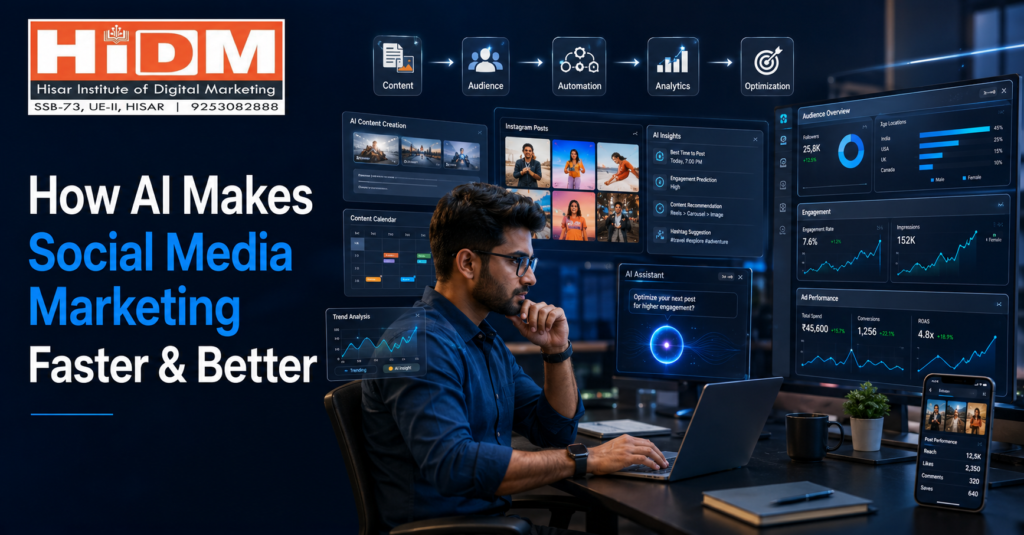
Social media marketing has become an important part of digital marketing for businesses of every size. However, managing multiple platforms, creating fresh content, responding to audiences, analyzing performance, and maintaining consistency can take a significant amount of time.
This is where AI in Social Media Marketing is changing the way marketers work.
Artificial intelligence can help marketers generate content ideas, analyze audience behavior, create captions, identify trends, automate repetitive tasks, and understand campaign performance. Instead of spending hours on manual activities, marketers can use AI to work faster while focusing more on strategy and creativity.
However, AI is not simply about automation. When used correctly, it becomes a powerful assistant that helps marketers make better and faster decisions.
Let’s understand how AI is transforming social media marketing.
What Is AI in Social Media Marketing?
AI in Social Media Marketing means using artificial intelligence technologies to support different social media marketing activities.
These activities can include:
- Content ideation
- Caption creation
- Social media scheduling
- Audience analysis
- Trend identification
- Content optimization
- Performance analysis
- Customer interaction
- Ad optimization
- Reporting
AI can process large amounts of information much faster than a person can manually. This allows marketers to identify patterns and opportunities that might otherwise take hours to discover.
The key is to use AI as a marketing assistant rather than relying on it to make every decision.
1. AI Makes Content Creation Faster
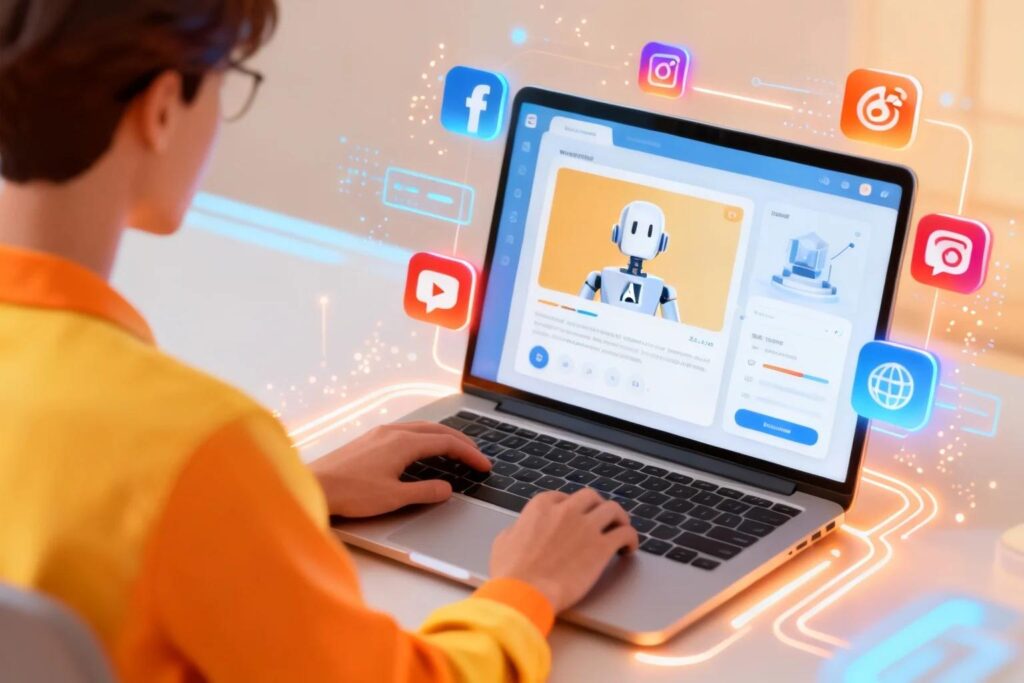
One of the biggest challenges for social media marketers is consistently creating new content.
Brands need reels, posts, carousels, stories, captions, hooks, scripts, and promotional ideas regularly.
AI can speed up this process by helping marketers generate:
- Content ideas
- Reel concepts
- Caption variations
- Video scripts
- Headlines
- Content calendars
- Creative hooks
- Hashtag ideas
For example, a digital marketer promoting a jewellery brand can use AI to generate multiple content concepts around weddings, festivals, gifting, styling, and product education.
The marketer can then select the best ideas and add the brand’s unique voice.
This makes AI content creation faster without removing the human creative process.
2. AI Helps Understand the Target Audience
Successful social media marketing depends on understanding the audience.
Marketers need to know:
- What customers are interested in
- What type of content they engage with
- What problems they have
- What motivates them to purchase
- Which platforms they use
- What type of messaging attracts them
AI can analyze audience and engagement data to identify patterns.
For example, if a brand discovers that educational reels generate more engagement than promotional posts, the marketing team can adjust its content strategy accordingly.
This helps businesses move from simply posting content to creating content based on audience behavior.
3. AI Makes Social Media Management More Efficient
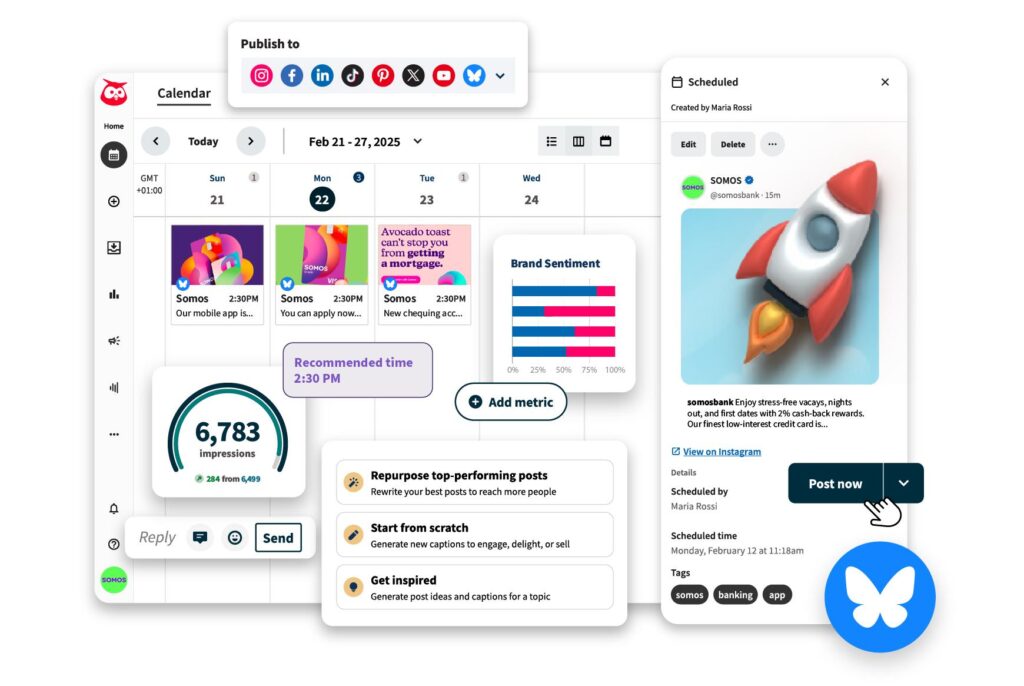
Managing multiple social media accounts can become complicated.
A business may need to manage Instagram, Facebook, LinkedIn, YouTube, and other platforms simultaneously.
AI-powered tools can help marketers organize and automate repetitive activities such as:
- Content scheduling
- Post planning
- Caption variations
- Performance summaries
- Content recommendations
- Routine reporting
This type of social media automation with AI saves time and allows marketers to focus on more important strategic tasks.
Automation should still be monitored by humans, especially when content involves sensitive topics, customer complaints, or important brand communication.
4. AI Helps Identify Trends Earlier
Social media trends can change extremely quickly.
A format that is popular today may become outdated within weeks or even days.
AI can help marketers analyze large amounts of social media information and identify emerging patterns, topics, keywords, and content formats.
For example, marketers can use AI-assisted research to discover:
- Emerging content themes
- Popular topics
- Audience interests
- Trending formats
- Frequently discussed subjects
This can help brands react faster and create relevant content while a trend is still gaining attention.
However, marketers should not blindly follow every trend. The trend should be relevant to the brand and its audience.
5. AI Improves Social Media Advertising
Paid social media advertising involves constant testing and optimization.
Marketers may need to test different:
- Ad creatives
- Headlines
- Primary text
- Audiences
- Calls to action
- Placements
- Campaign objectives
AI can help analyze campaign performance and identify patterns in the data.
For example, if one creative generates a higher click-through rate while another generates better conversions, the marketer can use these insights to make better campaign decisions.
AI-assisted optimization can therefore help marketers spend more time understanding why a campaign is performing a certain way instead of manually reviewing every data point.
6. AI Makes Performance Analysis Faster
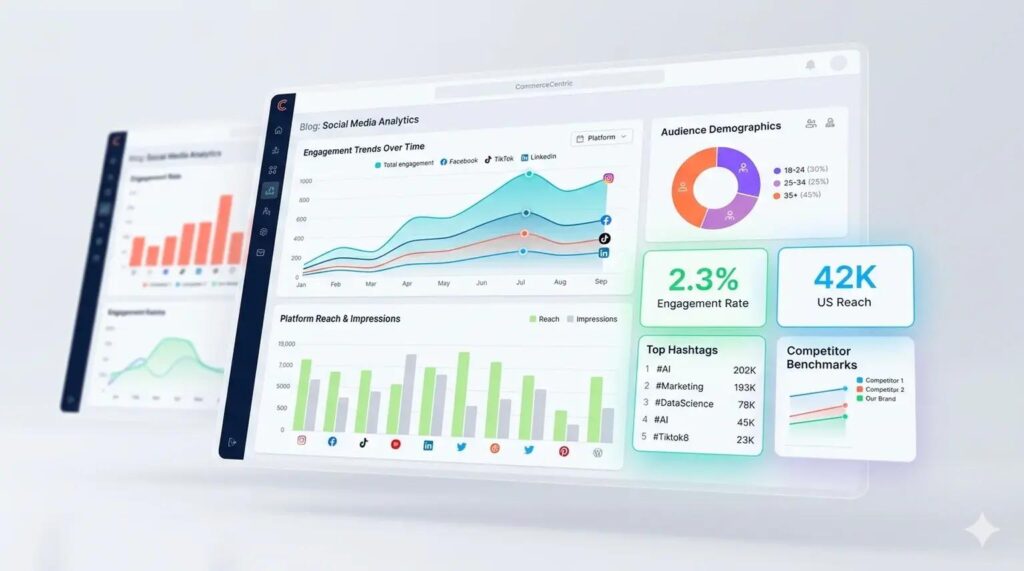
Social media campaigns generate large amounts of data.
Marketers may need to analyze:
- Reach
- Impressions
- Engagement
- Click-through rate
- Video views
- Followers
- Leads
- Conversions
- Cost per result
Manually reviewing all this information can be time-consuming.
AI can help summarize performance data and highlight important changes.
For example:
Campaign A: High reach but low conversion
Campaign B: Lower reach but strong engagement and conversions
Instead of focusing only on reach, marketers can understand which campaign is actually contributing to business goals.
This makes social media reporting more useful and data-driven.
7. AI Helps Personalize Social Media Content
Different customers respond to different messages.
A beginner may need educational content, while an existing customer may respond better to product recommendations or special offers.
AI can help marketers analyze audience segments and create more personalized content strategies.
For example, an educational institute could create different content for:
- School students
- College students
- Working professionals
- Career switchers
Personalization makes social media communication more relevant and can improve audience engagement.
8. AI Saves Time on Repetitive Tasks
A large portion of social media marketing involves repetitive work.
Creating variations, organizing content ideas, summarizing reports, categorizing comments, and preparing content calendars can consume valuable time.
AI can handle or assist with many of these repetitive activities.
This allows marketers to spend more time on:
- Strategy
- Creativity
- Brand building
- Customer understanding
- Campaign planning
- Performance optimization
The result is not just faster work but potentially better use of a marketer’s time.
9. AI Does Not Replace the Social Media Marketer
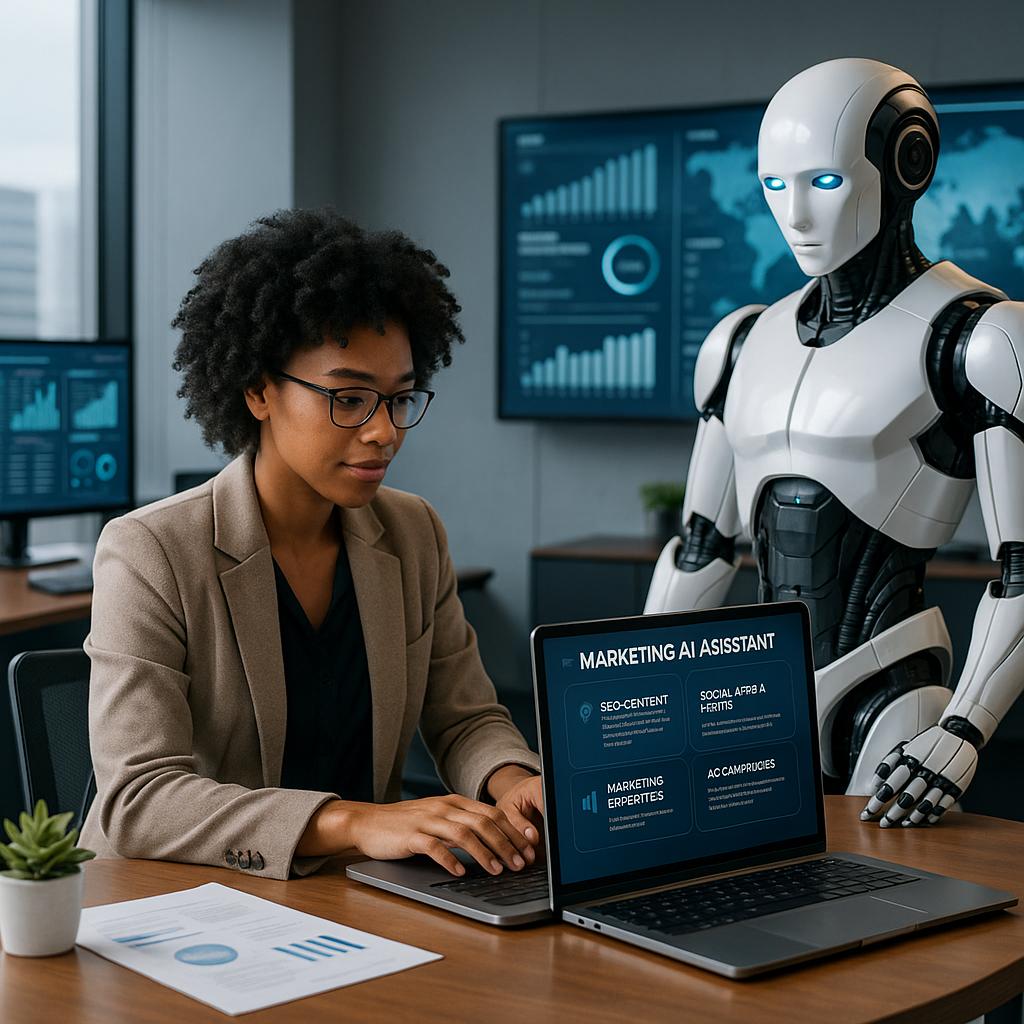
One of the biggest misconceptions is that AI will completely replace social media marketers.
In reality, AI still needs human direction.
A marketer must understand:
- Brand positioning
- Customer psychology
- Communication
- Creativity
- Marketing strategy
- Business objectives
- Cultural context
AI can generate ten captions, but a marketer must decide which one actually fits the brand.
AI can identify a trend, but the marketer must decide whether the brand should participate.
AI can analyze campaign data, but the marketer must determine what action should be taken.
Therefore, the future is not AI vs. Marketer.
It is AI + Marketer.
How Digital Marketers Can Start Using AI
Digital marketing learners do not need to master every AI platform at once.
A practical approach is to start with everyday marketing tasks.
Step 1: Use AI for content brainstorming.
Step 2: Use AI to create initial captions and scripts.
Step 3: Use AI for audience and competitor research.
Step 4: Use AI-assisted tools for content planning and scheduling.
Step 5: Use AI to analyze campaign performance.
Step 6: Compare AI recommendations with real marketing data.
Step 7: Make the final strategic decision yourself.
This approach helps learners understand not only how AI tools work but also where they fit into an actual marketing workflow.
The Future of Social Media Marketing with AI
The future of social media marketing will increasingly combine artificial intelligence with human creativity and strategic thinking.
AI will continue helping marketers create content, analyze data, automate workflows, identify opportunities, and improve campaigns.
But successful brands will still need authentic storytelling, strong positioning, creativity, and genuine connections with their audiences.
For digital marketing learners, this means learning traditional marketing fundamentals alongside modern AI tools is becoming increasingly important.
Institutes such as HiDM (Hisar Institute of Digital Marketing) can help learners understand this combination through practical digital marketing and AI-focused learning, where technology is connected with real marketing applications.
Conclusion
AI in Social Media Marketing is making the industry faster, more efficient, and increasingly data-driven.
From content creation and audience research to automation, trend identification, advertising, analytics, and personalization, AI can support almost every stage of social media marketing.
But the most effective approach is not to let AI take over the entire marketing process.
Instead, marketers should use AI to reduce repetitive work and gain insights while using human creativity, strategy, and judgment to make the final decisions.
The future belongs to marketers who can combine marketing knowledge + AI tools + creativity + data + strategy.
Learning how to use AI effectively today can help digital marketers become more productive, adaptable, and prepared for the future of social media marketing.